SANTA ANA DUPLEX BLOG 2
Foundation Phase Complete: Santa Ana Duplex ADU Update
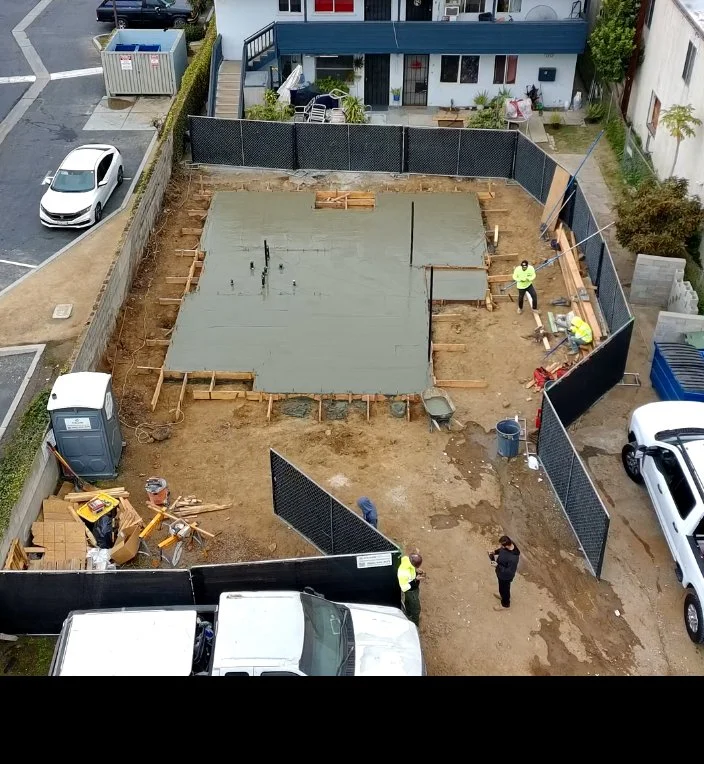
We started the first full working week of 2026 continuing construction on our Santa Ana duplex ADU project. Southern California saw significant rainfall over the Christmas and New Year’s break, but we were fortunate to complete the concrete foundation and pass all required inspections before the storms began.
That timing made a major difference. Few things derail a project faster than open footings filling with water, collapsing soil, and compromised rebar work. Completing the foundation before the rain allowed us to protect both schedule and quality.
This post walks through what the foundation phase involved on this project and highlights key facts and common questions homeowners should understand at this critical stage of construction.
What Is the Foundation Phase?
The foundation phase is when the concrete that supports your structure is installed. This is the most important phase of construction because it establishes the building footprint and creates the structural system that anchors the home to the earth.
For this project, we installed a slab-on-grade foundation with continuous footings beneath all load-bearing walls and shear walls. This is one of the most common foundation systems used in California, particularly for new residential construction and ADUs.
Pre-Concrete Work: Layout, Excavation, and Footing Depth
Before any concrete is poured, the building must be positioned accurately using a line and grade survey. We covered this in our previous blog post, but it cannot be overstated—if the building is not correctly located, costly rework can follow.
Once layout is confirmed, footing excavation begins. Footing depth is an area where many projects encounter problems due to misinterpretation of the plans.
On this project:
Footings were required to be 24 inches below existing grade
The top of the finished slab was required to be 8 inches above grade
This results in a total footing depth of 32 inches. A common misconception is that footing depth is measured from the top of the form boards—this is incorrect. The required depth must account for both the slab elevation above grade and the footing depth below grade.
Soil Report and Compaction Testing
Another critical component of the foundation phase is the soil report and compaction testing.
This project came to us with an existing soil report, but we were still required to perform a compaction test before footing excavation. During compaction testing, a Deputy Inspector observes the soil being compacted in lifts (layers), ensuring each layer meets required density before the next layer is placed.
A helpful analogy is baking a layered cake—each layer must be properly set before adding the next. Without passing compaction testing, a city inspector may fail the foundation inspection, leading to delays or required rework.
Required City Inspections
For a project of this size, there are typically three inspections before concrete placement:
Footing depth inspection
Underground plumbing inspection
Rebar and form board inspection
With proper sequencing, these inspections can move quickly. While waiting on plumbing inspection, rebar cages can be fabricated and pre-bent. On this Santa Ana ADU, from initial layout to concrete pour, the entire foundation phase took just under two weeks.
Common Foundation Mistakes That Cause Delays
Some of the most frequent issues that delay foundation work include:
Dirty footings: Inspectors require footing bottoms to be free of debris—no roots, trash, rocks, or large clumps of soil. Cleanliness here can prevent re-inspections and concrete delays.
Improper rebar spacing: Plans specify required clearances between rebar and soil, between rebar members, and from exposed concrete surfaces. Improper spacing reduces structural integrity and can fail inspection.
Attention to detail at this stage saves significant time and cost later.
Rebar, Anchors, and Structural Details on This Project
For this foundation:
Footings contained four continuous #5 (5/8”) lateral bars
Additional rebar was installed to maintain spacing and rigidity
Slab-on-grade reinforcement consisted of #4 (1/2”) rebar at 18 inches on center
Anchor bolts were spaced:
4 feet on center in standard wall areas
16, 24, or 36 inches on center at shear walls, depending on required capacity
Shear walls provide increased resistance to seismic forces and building movement. We will cover shear wall systems in more detail in a future post.
Underground Plumbing Coordination
One of the most critical—but often underestimated—aspects of the foundation pour is underground plumbing placement.
Drain lines must be precisely located to match bathroom layouts, shower centers, toilet clearances, and vanity sizes. These decisions cannot be deferred to the finish stage.
We also ensure:
Vent and drain risers align perfectly within wall cavities
Second-story plumbing stacks land centered in 2×6 walls where required
String lines are run on wall layouts prior to pouring concrete
This precision ensures clean tile layouts, proper clearances, and avoids costly structural or finish conflicts later.
Final Inspection and Pour Day
Our final pre-pour inspection went smoothly. The inspector specifically noted proper rebar spacing and coverage—details that are frequently missed but critical for long-term structural performance. The inspection took less than 10 minutes.
On pour day:
4500 PSI concrete was required—stronger than typical residential mixes
Five trucks (approximately 45 yards) were scheduled for 7:00 AM
A line pump was used for efficient placement
Footings were poured first and allowed to set before placing the 5-inch slab-on-grade
We prefer morning pours, which allow for slower curing and better finishing conditions. December 23 posed logistical challenges due to holiday plant shutdowns, but all trucks arrived without delay.
Moving Forward
The pour went smoothly, the site was left clean, and the concrete was given ample time to cure over the holiday break. With the foundation complete, we are ready to move into the framing phase and begin building vertically.
We hope this post provided clear, high-level insight into what it takes to complete a concrete foundation for an ADU project.
If you are considering building an ADU in Orange County or surrounding areas, feel free to contact Clays Construction. We are happy to answer questions or partner with you on your project.